
Righteous Resistance
Turning the other cheek, going the extra mile, and loving enemies

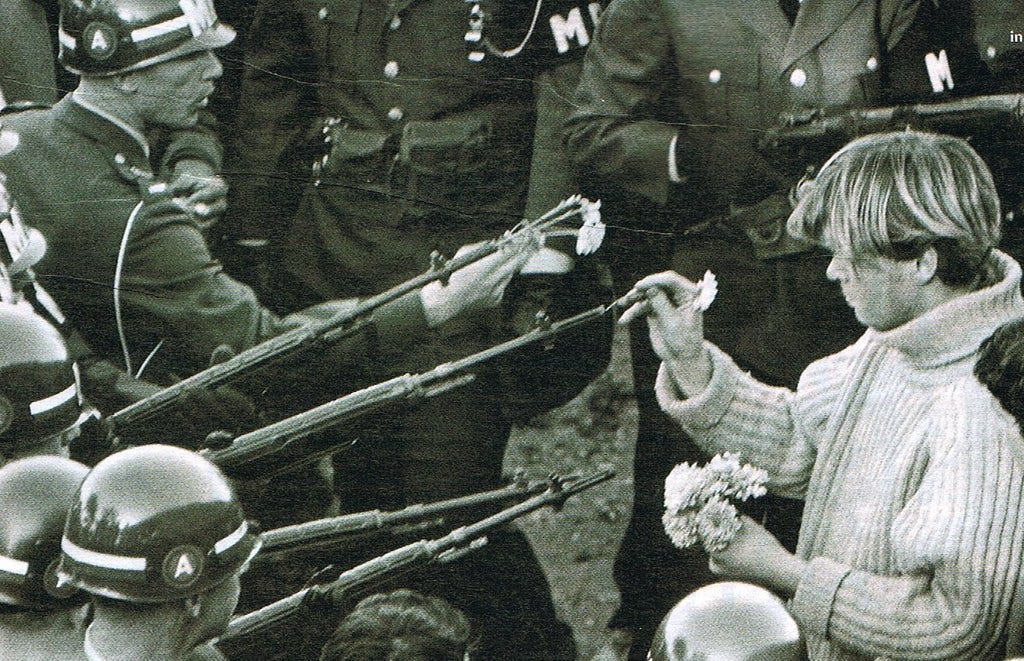
I had a silly little intro written up that was going to use the spitting incident involving the Philadelphia Eagles’ Jalen Carter and the Dallas Cowboys’ Dak Prescott1. But one of the unfortunate consequences of living in a violent world is that we are never too far removed from the previous and next serious example of our need for nonviolent, enemy love. In light of Charlie Kirk’s horrific murder and subsequent reactions, Jesus’ words from Matthew 5:38-48 are as relevant as they’ve ever been.2
Creative Nonviolent Resistance
You have heard that it was said, An eye for an eye and a tooth for a tooth. But I tell you, don’t resist an evildoer. On the contrary, if anyone slaps you on your right cheek, turn the other to him also. As for the one who wants to sue you and take away your shirt, let him have your coat as well. And if anyone forces you to go one mile, go with him two. Give to the one who asks you, and don’t turn away from the one who wants to borrow from you.
Matthew 5:38-42
Once again, Jesus is inviting us to a deeper relational righteousness. In the above passage Jesus is addressing the natural escalation violence has. “An eye for an eye” and “a tooth for a tooth” were already laws put in place to stop escalation. We all know how this works. In a verbal fight someone says something that hurts you and so you come back and aim to hurt them as well. Once you’ve each got your one good insult in, you shake hands and move on…right? No? Me neither. It keeps escalating. We also know this is true of physical fights. You foul me too hard in a pick-up basketball game, next time down the court I get you good, and now we’re throwing punches.
The idea behind “an eye for an eye” and “a tooth for a tooth” was to keep retaliation fair and just. The problem is we aren’t always good at determining equal retaliation. Our emotions get in the way and we overreach. Jesus calls us not just to equal retaliation, but to complete de-escalation and creative nonviolent resistance.
Nonviolent resistance has long been a hallmark of Christ followers.3 This is often referred to as pacifism, but as I’ve written about before that word has a lot of connotation and leads people to thinking of passive-ism. Jesus’ teachings here in Matthew 5 and elsewhere are often easily dismissed because “turning the other cheek” as become equated with being a doormat. However, Christian Nonviolence is not about being passive, it’s about being creatively and nonviolently resistant to the ways of Empire and the use of power over the other. The three instances Jesus gives—turning the other cheek, giving of the coat, and going the extra mile—are prime examples.
Turning the Other Cheek
Note that Jesus says, “if anyone slaps you on your right cheek”. Imagine someone standing in front of you. The odds are they are right-handed, so how would they slap you on your right cheek? They’d have to backhand you, yes? A backhanded slap is not primarily to inflict pain, so much as to inflict shame and humiliation. We can wrap our minds around this idea, but recall, also, that Jesus is speaking in a strong honor/shame culture. You wouldn’t backhand an equal. A master would backhand their slave, for instance. If this happens, Jesus says “turn the other cheek.” This is to establish equality. If I’m backhanded on my right cheek and turn to my assailant the other cheek, his only recourse is to open hand slap me or punch me. He very well may do this, but what Jesus is saying is not to accept belittling treatment; shine a light on the fact that you are an equal to those who mistreat you. Could the slave, in this instance, still be beaten? Sure, but he will not be intimidated.
This turning of the cheek, then, is not to be a doormat. It is also no way to avoid being hit. This type of behavior, in fact, could bring more harm your way. But, as Walter Wink points out, Jesus is addressing a large crowd. This type of creative, nonviolent resistance instituted by the masses is how a revolution begins.
Shirt and Cloak, Have It All
This is a weird bit that makes little sense to us. In a 1st century context, it becomes clearer. The first thing we need to understand is that there were two layers people wore: the outer and the inner. The second point of background comes from a little section in Deuteronomy 24:10-13:
When you make a loan of any kind to your neighbor, do not enter his house to collect what he offers as security. Stand outside while the man you are making the loan to brings the security out to you. If he is a poor man, do not sleep with the garment he has given as security. Be sure to return it to him at sunset. Then he will sleep in it and bless you, and this will be counted as righteousness to you before the Lord your God.
The poor, who had nothing else to their name, would offer their tunic, or the inner layer, of their clothing as collateral for any loan they took. This was more symbolic than anything else. If you were loaning to someone who was poor, their underwear doesn’t do you much good. But again, we are in an honor/shame culture and the inner layer was longer than the outer, so people would know. The real collateral was not the underwear, it was the poor man’s dignity. You want your dignity back? Give me what you owe me.
Jesus says, offer him your outer layer as well…but what does this solve? Now you’re just naked. Well, again, we need to know something about the 1st century audience. In that culture nakedness did bring shame, but the shame was primarily on the one who saw the nakedness or caused it, not the one who was naked. Jesus is telling his poor audience to reject the shame of the powerful and instead to make them shoulder the shame.
The Extra Mile
The Angaria was an institutionalized system that prescribed how much forced labor Roman troops subject the citizens of their occupation to. The rule was one mile. Anything more than this was an infraction of military code. Infractions like this seem to be handled at the discretion of the commanding officer and could fetch the soldier a fine, a flogging, a rationed diet, or as little as a verbal reprimand. But the soldier doesn’t know what will happen, only what could happen. It makes them uneasy. The powerful believe they are in control and the demand that the poor carry their materials for one mile to prove it. By going the extra mile, the poor wrestle control from the powerful and assert their human dignity and show their own initiative.
With this cultural context, we can see that Jesus did not demand that we be quiet and take it. Jesus is encouraging us to stand up to the ways of Empire and to those who use the ways of Empire to oppress and demean. Creative, nonviolent resistance shines a light on the dehumanizing ways of Empire and allows us to reclaim the dignity God bestowed on all of humanity.
What do you think of this understanding of Jesus’ teaching here? Had you heard this context before? What might modern examples of nonviolent, creative resistance look like?
If you’re unfamiliar, consider yourself lucky. It’s dumb.
I moved this weekend and this post got long enough anyway, so I’m saving Matthew 5:43-48 for next weekend.
Admittedly, so has violence. This is especially true when Emperor Constantine co-opted Christianity in the year 312 creating an unholy union between the Church and the Empires of this world. The consequences of which are still echoing throughout the world.
Insightful, I never knew any of this in context. It's not saying to be a doormat, but almost saying to the powerful, "how far will you go?" Sure, one may have limited power over another, but is it really something you want to wield in this way?